
Water Treatment · Florence, SC
Orange Stains and Discolored Water: Water Softener Options in Florence, SC
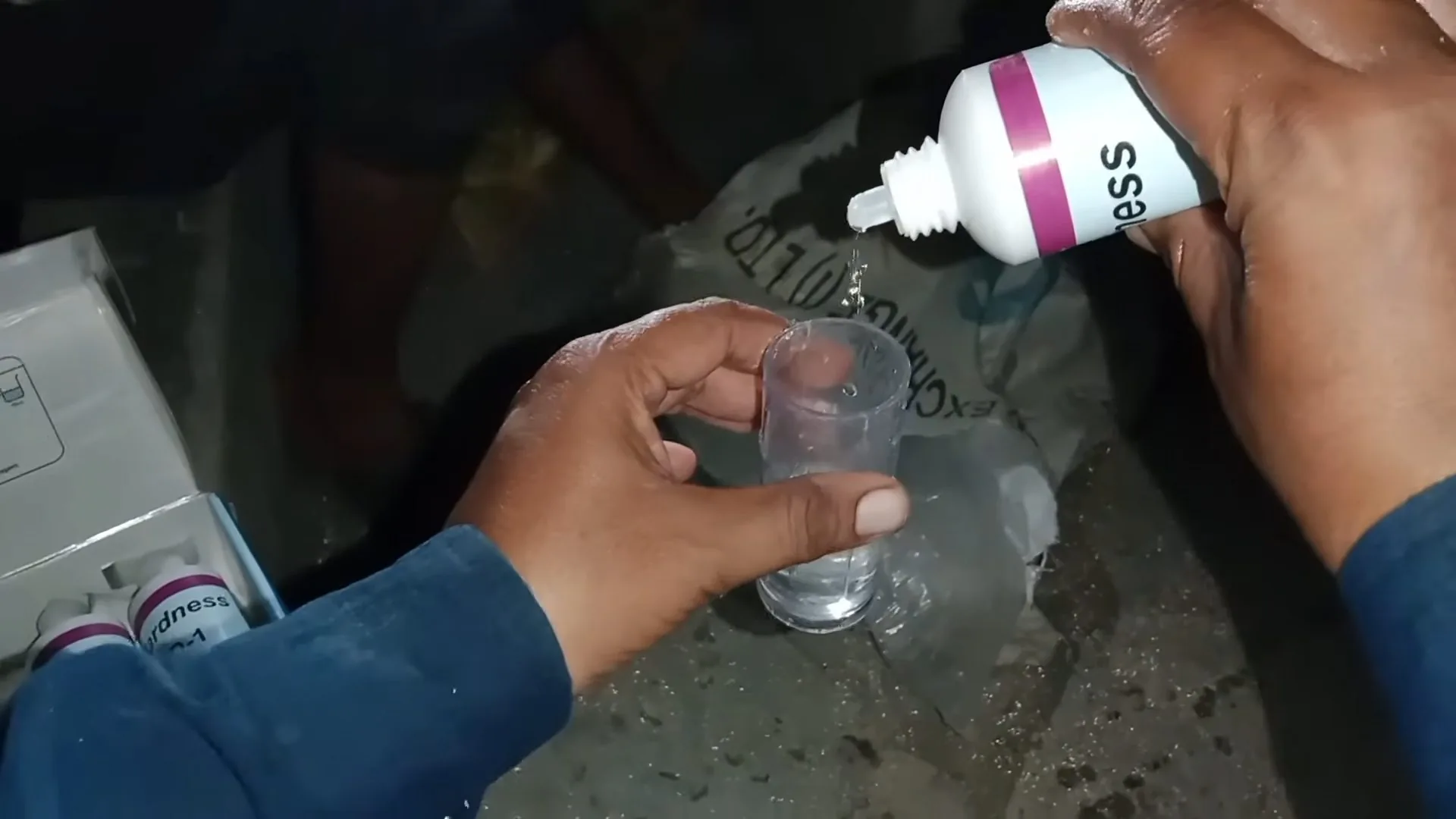
The useful rule with water treatment is that you cannot sensibly treat what nobody has measured. Equipment sized to a guess either does not fix the complaint or treats something that was never there.
So this starts with a test on your water at your tap, which is a different thing from the citywide averages in a utility report. What arrives at a house depends on the blend that day and on the pipe it travelled through to reach you.
What is actually published about Florence water
City of Florence Utilities serves about 79,745 people. Roughly 60 percent of supply comes from the McQueen Branch Aquifer through groundwater wells, with the rest from the Frank E. Willis Pee Dee River Regional Surface Water Plant drawing on the Pee Dee River.
The 2025 water quality report gives lead at a 90th percentile of 1.1 parts per billion against a 15 ppb action level, and copper at 0.39 ppm against a 1.3 ppm action level. The city's own inventory reports no lead service lines anywhere in the distribution system, customer-owned lines included.
Reporting on the city's infrastructure programs separately cites elevated iron as the cause of discolored water at the tap. That is the water quality issue with a real published basis here.
The figure nobody publishes
There is one thing worth saying plainly, because a lot of plumbing marketing says the opposite. The city's 2025 water quality report does not publish a hardness figure for this system, and we could not find one from any primary source.
So we do not tell you Florence has hard water, and we would be suspicious of anyone who quotes you a grain count for the city without having tested your tap. If hardness turns out to be your issue, a test will show it, and then a softener is a sensible answer rather than a guess.
Iron, which is the documented one
Iron is what most often produces the complaints we hear here: water that runs tinted or rusty, orange or brown staining in sinks, tubs and toilet bowls, laundry that comes out marked, and a metallic taste.
The treatment depends on the form. Dissolved iron is clear at the tap and only discolours after it has sat and oxidised. Already-oxidised iron arrives visibly coloured. Those need different media, which is another reason the test comes first.
Modest dissolved iron can be handled by a softener. Higher concentrations or oxidised iron need dedicated filtration, and installing a softener against the wrong problem fouls the resin and the unit stops working within months.
Staining in fixtures or discolored water? A test tells you which problem you actually have before anyone sells you equipment.
Call (866) 919-0785What a softener does, and what it does not
A softener exchanges hardness minerals for sodium across a resin bed, then rinses that resin with brine on a cycle. That is the whole mechanism, and understanding it makes clear what it cannot do.
It does not remove chlorine, it does not improve taste in any general sense, it does not filter sediment, and it does not address bacteria. Equipment sold as a solution to all of those is usually several units in one cabinet.
| What you are seeing | Likely cause | What actually addresses it |
|---|---|---|
| Orange or brown staining in fixtures | Iron | Iron filtration, media chosen by form |
| White scale on fixtures and kettles | Hardness | Softener, once a test confirms it |
| Chlorine taste or smell | Disinfectant residual | Carbon filtration |
| Grit in aerators and valves | Sediment | Sediment prefilter |
| Metallic taste, no staining | Could be several | Test before buying anything |
Whole-home filtration and where it goes
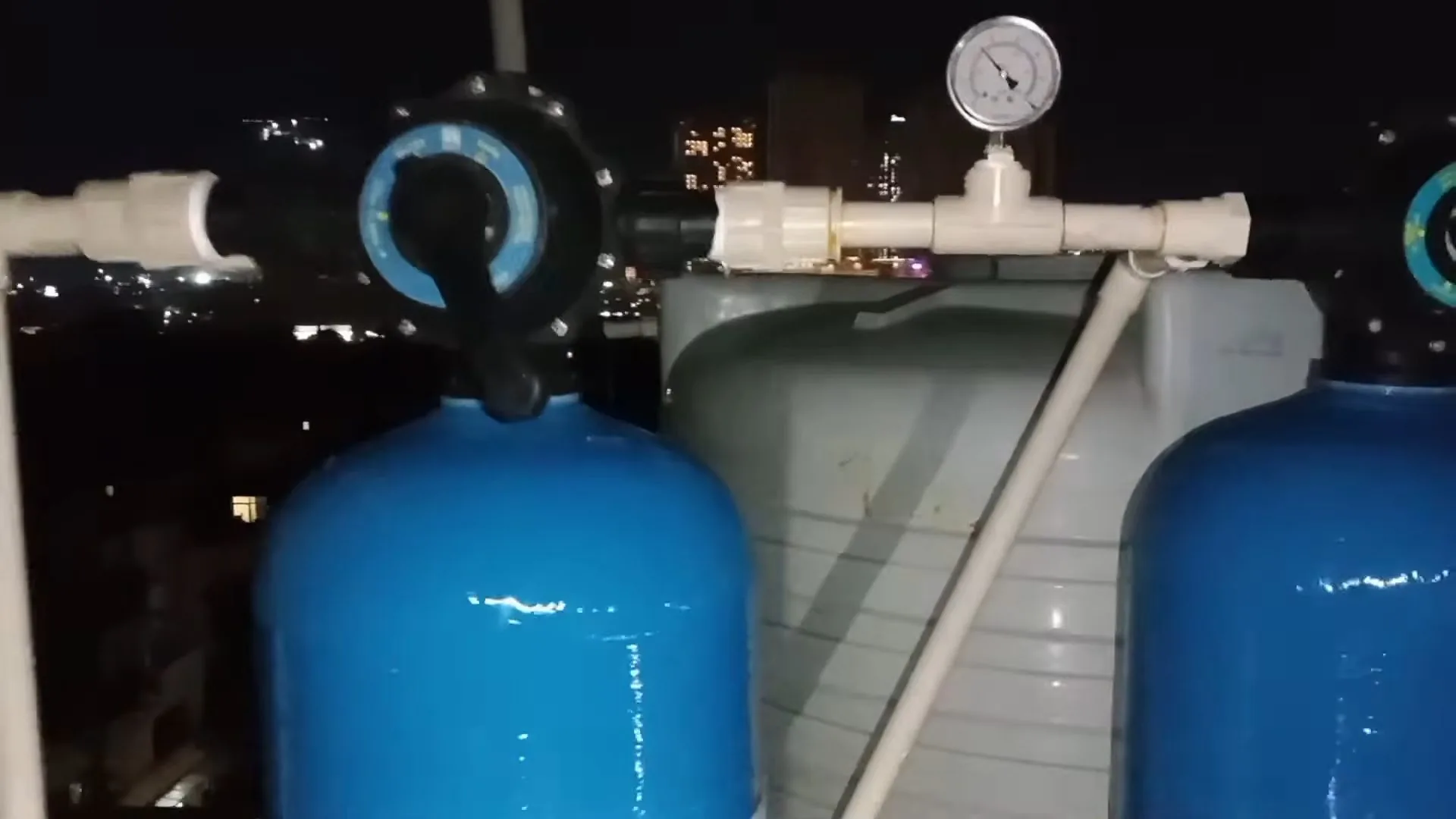
Whole-home treatment sits on the main line where it enters the house, so everything downstream is treated. Where multiple problems exist the units run in sequence, and the order matters: sediment first so the finer media are not fouled, then iron, then softening, then carbon.
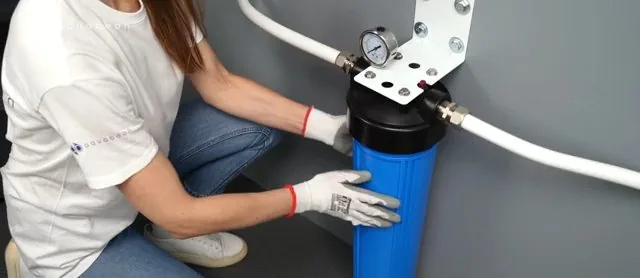
Point-of-use filtration at a single tap is a different and much smaller job, and for a taste complaint at the kitchen sink it is often the proportionate answer rather than treating the whole house.
Drain, power, space and bypass loop for treatment equipment
Any of this needs three things at the install location: a drain for the regeneration or backwash cycle, power where the unit has a controller, and enough space to service it without dismantling anything.
A bypass loop matters more than people expect. Without one, servicing the unit means shutting off water to the whole house, which turns a routine job into an afternoon without water.
Water treatment maintenance: salt, brine tank and filters
Treatment equipment does not fail dramatically. It quietly stops working, and the first sign is usually the original complaint returning months after everyone stopped thinking about it.
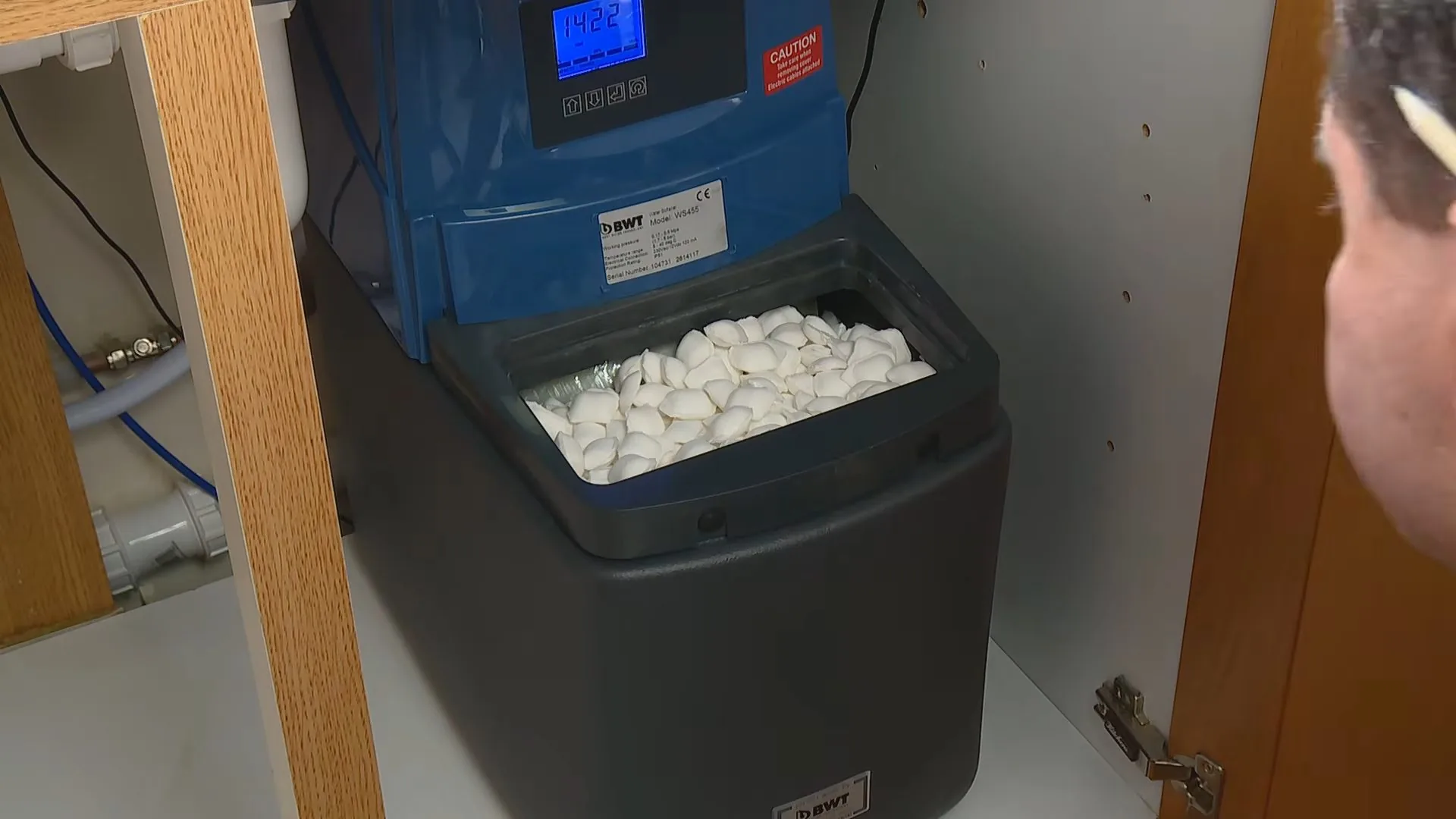
Softeners need salt kept topped up and the brine tank checked for a hardened crust that stops it drawing. Filtration media have a service life that depends on how much they are removing, so a house with higher iron exhausts media faster.
The useful habit is retesting annually. It confirms the equipment is doing what it was installed to do, and it catches a change in the supply blend before it becomes a complaint.
Treatment and the rest of the plumbing
Iron and sediment do not only stain fixtures. They settle at the bottom of a water heater tank, which is what causes the rumbling as the burner or element heats through the layer, and they collect in aerators and valve seats.
So treatment is often worth considering at the same time as a heater replacement. The new tank is the thing that benefits most, and the access is already open.
Water quality questions from Florence homes
Is the water hard in Florence?
We cannot tell you that it is, and we would rather say so. The City of Florence 2025 water quality report does not publish a hardness figure for this system, and no primary source we could find gives one. Anyone quoting you a grain count for the city without testing your tap is guessing. If hardness is your issue, a test on your own water will show it.
Why is my water discolored or staining the fixtures?
Iron is the most likely answer here, and it is the one with a published basis: reporting on the city's infrastructure programs cites elevated iron as the cause of discolored water. It shows as orange or brown staining in sinks, tubs and toilets, marked laundry and a metallic taste. Which treatment works depends on whether the iron is dissolved or already oxidised, which a test establishes.
Will a water softener fix discolored water?
Sometimes, and only up to a point. A softener can handle modest dissolved iron as a side effect of how its resin works. Higher concentrations, or iron that has already oxidised, need dedicated filtration. Putting a softener against the wrong problem fouls the resin and the unit stops performing within months, so the test matters more than the equipment choice.
What does a water treatment system cost in Florence?
It depends on what the test finds and therefore how many stages you need. A single point-of-use filter at one tap is a small job. A whole-home system running sediment, iron and softening in sequence is substantially more, and the install location matters because it needs a drain, power and a bypass loop. We quote a range once we know what we are treating, and the Cost page carries wide market ranges.
Do I need a licensed plumber to install water treatment equipment?
Whole-home equipment ties into the main line and needs a drain connection, so it is plumbing work, and South Carolina requires a Residential Plumber license from the Residential Builders Commission for residential work over $500. You can check any contractor at verify.llronline.com under that Commission, or reach them on (803) 896-4696.
Discolored water or staining? Describe it for a likely cause
Describe what is happening and you get a straight read on the likely cause, what the fix involves, and a price range before any work starts.