
Leak Detection · Florence, SC
Hidden Leak Detection in Florence, SC: Meter Checks, Wall Moisture and Finding the Source
A hidden leak is usually found by its side effects rather than by water. The bill moves, the meter turns with everything off, a wall stays damp, or there is a sound of running water with no tap open.
The job is to turn that into a location precise enough to repair, without opening walls or floors to look. That is what detection equipment is for.
Signs of a hidden leak: bills, meters and damp patches
Most hidden leaks announce themselves the same handful of ways, and the earlier ones are easy to dismiss.
- A water bill that rose with no change in how much water you use
- The meter moving when every fixture in the house is closed
- The sound of water running with nothing turned on
- A damp patch, a stain that returns after painting, or paint bubbling on a wall
- A musty smell in one room that does not clear
- Reduced pressure across the whole house rather than at a single tap
- An area of floor that is warm, soft or discoloured
- Vegetation growing noticeably faster in one strip of the yard
The meter test, which you can do before calling
Close every fixture, read the meter, wait a set interval using no water, then read it again. Movement means the house is losing water. That single test saves a lot of guessing and costs nothing.
If you can find the shutoff where the supply enters the house, closing it and repeating the test tells you something further: if the meter still moves with the house isolated, the leak is between the meter and the house rather than inside it.
Acoustic listening and thermal imaging for leak location
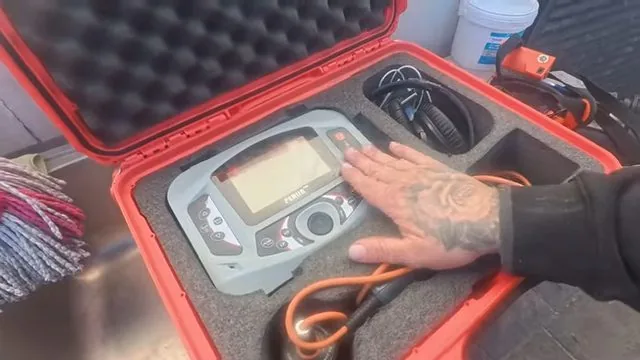
Acoustic listening is the core method. Water escaping a pressurised pipe makes a characteristic sound that travels through pipe, soil and concrete, and ground microphones pick it up. It is precise in the right conditions and poor through thick or loose fill.
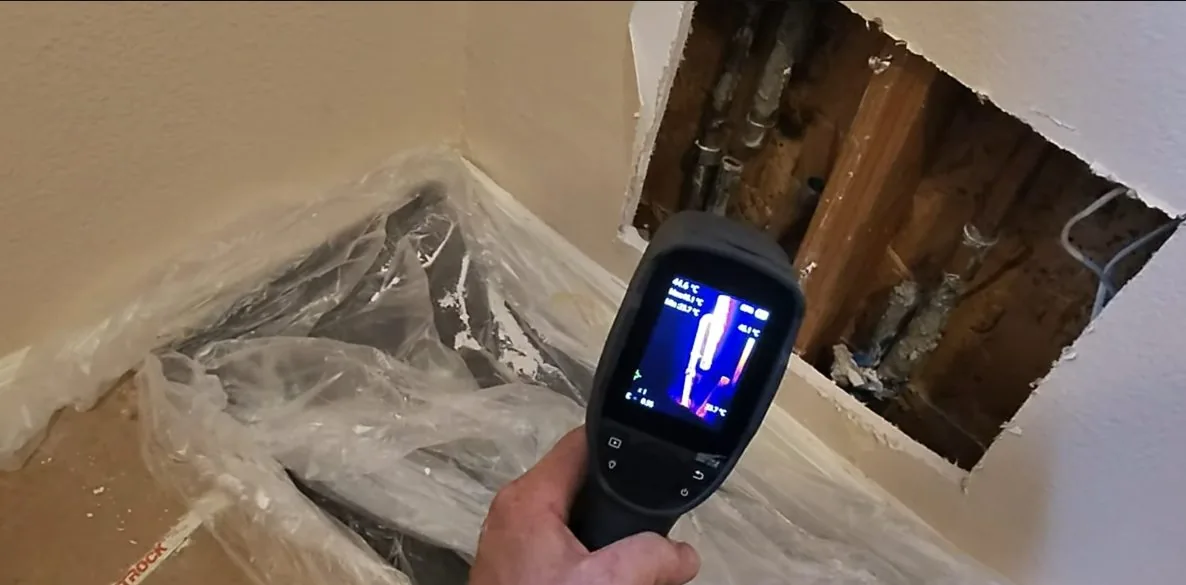
Thermal imaging finds temperature differences rather than sound, so it is strong on hot lines and on damp areas cooler than their surroundings, and it reads surfaces rather than depths.
Pressure testing isolates sections to establish which line is losing water before anyone listens for it, and tracer methods are available for the cases the first three cannot resolve.
Meter moving with everything off? Tell us what it is doing and we will tell you which test comes next.
Call (866) 919-0785Leaks inside walls and behind tile
A supply line inside a wall leaks under constant pressure, so it does not wait for anyone to use a fixture. The usual signs are a stain that keeps returning, paint bubbling, or a baseboard that has lifted.
Behind tile the signs are subtler: grout that stays dark in one area, or a tile that sounds hollow when tapped. Finding the exact point matters more here than anywhere, because the cost of opening the wrong section of tiled wall is substantial.
Ceiling leaks, and telling plumbing from roof
Water at a ceiling is the one symptom with two completely different sets of causes, and the diagnosis is worth getting right before anyone is called out.
Plumbing leaks run constantly or follow fixture use, show up directly below a bathroom or a supply run, and do not care about the weather. Roof leaks appear during or shortly after rain, often some distance from where water enters because it tracks along framing first.
The timing test is the useful one: if the stain grows on a dry week, it is plumbing. If it only moves when it rains, the problem is above the ceiling rather than in the pipes, and that is roofing work rather than ours. We will tell you that rather than billing for a leak hunt that was never going to find anything.
Leaks under floors and in crawl spaces
Under a crawl space, a leak can run for a long time without anyone noticing, which is why crawl space lines are worth inspecting periodically rather than waiting for a symptom. The usual first sign is a bill, not a puddle.
Under a concrete slab the symptoms differ: a warm patch, flooring that lifts, and the sound of water with everything closed. Slab leaks have their own page because the repair decisions are different.
Pinhole leaks in copper, which rarely come alone
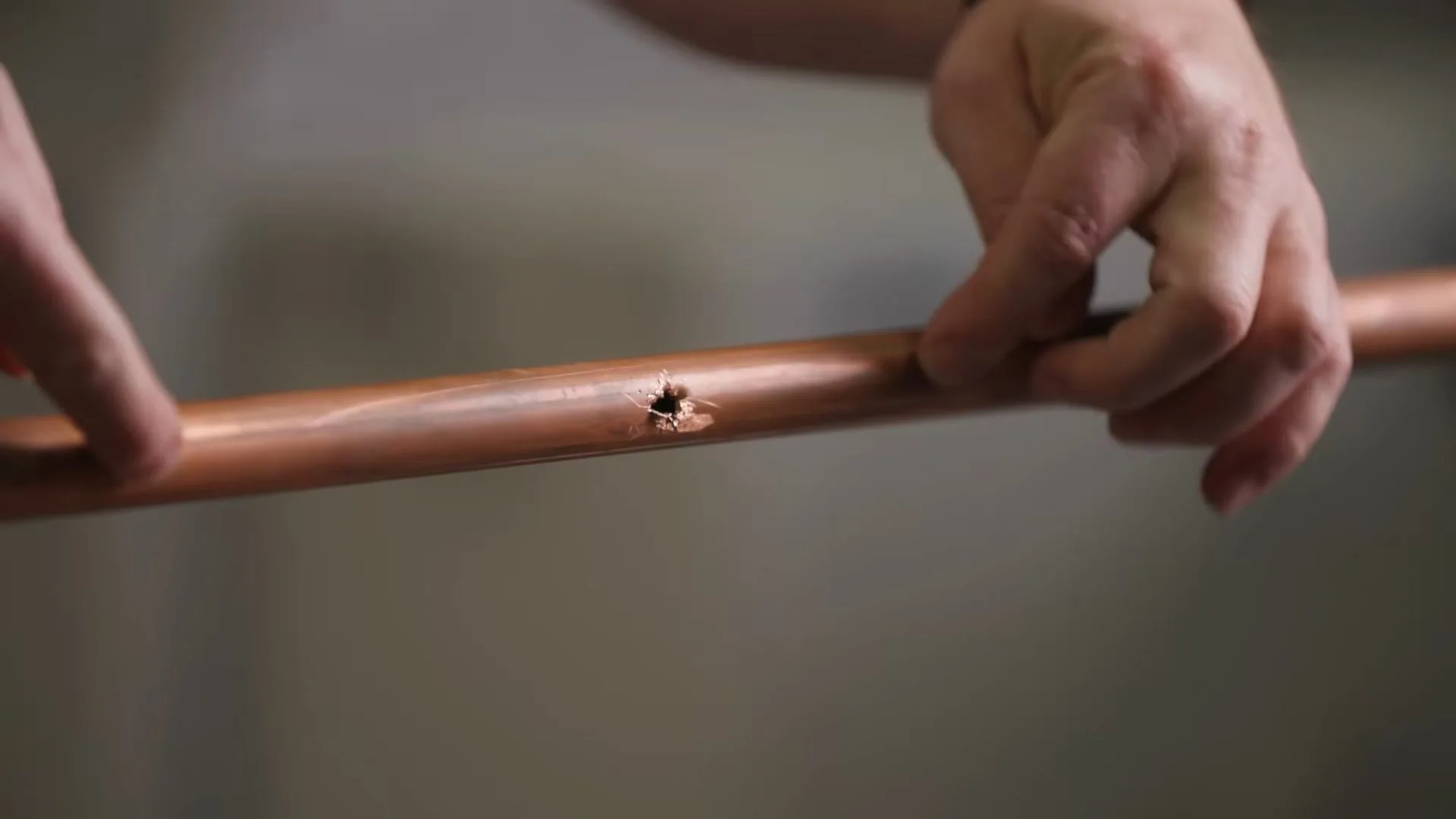
A pinhole in a copper line is a small hole from corrosion working outward from inside, and it matters more than its size suggests. Where water chemistry or velocity has caused one, it has usually been working on the rest of that line too.
So a single pinhole is worth treating as information rather than just a repair. If the line is original and a second one follows within a year or two, that is the point to look at replacing the run rather than patching it a third time.
Yard and service line leaks
Between the meter and the house, a leak shows as an unexplained bill, a soft or unusually green strip of lawn, or water surfacing somewhere with no obvious source.
These are located acoustically from the surface, and a correlator can be used on longer runs to narrow the position before any digging. That matters because the excavation is the expensive part of a service line repair, not the pipe.
Anything that involves digging needs utility locating done first, without exception. That applies to us and to anyone else putting a shovel in the ground.
Irrigation, pools and spas
Irrigation systems leak quietly because they run on a schedule, often at night, so nobody watches them. A zone that stays wet between cycles or a head that weeps constantly will not show as a dramatic symptom, only on the bill.
Pools and spas lose water to evaporation normally, so the question is always whether the loss exceeds that. The bucket test separates the two before anyone goes looking for a structural or plumbing leak in the circulation system.
What this page does not cover
Gas leaks are detected differently and are covered on their own page, because the safety sequence comes first and the equipment is not the same. If you can smell gas, leave the building and call from outside rather than reading further.
Roof and gutter leaks, as above, are not plumbing work. We will help you tell which you have, and we are straightforward about it when the answer is that you need a roofer.
Commercial leak detection
In a commercial building the economics are different, because a leak that would be a nuisance at home is a closed business or a damaged stock room. Detection usually has to be non-invasive and done outside operating hours.
Larger buildings also have more line to search, so pressure isolation matters more than it does in a house. Narrowing which riser or which zone is losing water before listening is most of the job.
Leak questions worth asking first
How can I tell if I have a hidden leak before calling anyone?
Do the meter test. Close every fixture in the house, read the meter, wait a set interval without using water, and read it again. If the reading has moved, water is leaving the system somewhere. If you can also close the shutoff where supply enters the house and the meter still moves, the leak is between the meter and the house rather than inside it. That narrows things considerably before anyone arrives.
My ceiling is stained. Is that a plumbing leak or the roof?
Timing tells you. A plumbing leak runs constantly or follows fixture use and does not care about the weather, so the stain grows during a dry week. A roof leak only moves during or shortly after rain, and often enters some distance from where it shows because water tracks along framing first. If it only moves when it rains, you need a roofer rather than us, and we will say so.
Do you have to open walls or dig to find the leak?
No. That is what the equipment is for. Acoustic listening, thermal imaging and pressure testing are used together to narrow the leak to a small area, and for yard lines a correlator narrows it further before any digging. Opening walls or ground to search is what makes leaks expensive, so location comes first and the repair is targeted.
What does leak detection cost in Florence?
Detection is usually priced separately from the repair, because what is found decides what the repair is. A straightforward interior location sits below a buried service line needing correlation and excavation. We quote a range before starting, and the Cost page carries wide market ranges for the repairs detection most often leads to.
I had one pinhole leak repaired. Should I be worried about the rest?
It is worth paying attention to. A pinhole is corrosion working outward from inside the pipe, and whatever caused it has generally been acting on the rest of that line as well. One is a repair. A second on the same line within a year or two is a signal about the line's condition, and that is the point to consider replacing the run rather than patching it again.
Something is leaking and you cannot find it?
Describe what is happening and you get a straight read on the likely cause, what the fix involves, and a price range before any work starts.