
Bathroom Fixtures · Florence, SC
Wet-Space Bathroom Plumbing in Florence, SC: Shower Valves, Tub Drains and Fixture Replacement
Most bathroom calls start with water showing up somewhere it should not be: a stain on the ceiling below, a soft spot at the base of a toilet, or grout that stays dark after everything has dried.
The reason bathrooms produce these is that most of the plumbing is buried behind tile and under a pan. A leak there has somewhere to go before it has somewhere to show, so the damage is usually older than the symptom.
A stain on the ceiling under a bathroom
This is the most common bathroom call and it has four usual causes, which is why guessing is expensive. It is the shower pan, the drain connection under it, the valve inside the wall, or the toilet seal.
They are distinguishable by behaviour. A stain that appears only after a shower points at the pan or the drain. One that appears whether or not anyone showered points at a supply line or valve, because those are under pressure all the time. One that appears after a flush points at the toilet.
We establish which before opening a ceiling, because the ceiling repair is often the larger part of the bill.
| When the stain appears | What it usually means | First test |
|---|---|---|
| Only after someone showers | Pan, pan drain or the connection below it | Fill and hold test on the pan |
| All the time, wet or dry | Supply line or valve body under constant pressure | Meter test with everything off |
| After a flush | Wax or closet flange seal at the toilet | Pull and inspect the seal |
| Worse in winter only | A line in an exterior wall, or condensation | Inspect during use |
Shower pans, valves and the parts behind the tile
A shower pan leak is the one most people find late. The pan is a waterproof layer under the tile, and when it fails water passes through the floor rather than collecting anywhere visible.
Valves are the other buried item. A shower valve that drips when the handle is off is wasting water and wearing its seat, but a valve body leaking inside the wall is a structural problem rather than a water bill one.
Most valve work is done from the front through the trim plate, so tile does not have to come out. An access panel from the other side of the wall is the usual fallback. We would tell you before starting if tile removal looked likely.
Seeing a stain below a bathroom? We locate the source before anything gets opened up.
Call (866) 919-0785Tubs, surrounds and wet-space replacement
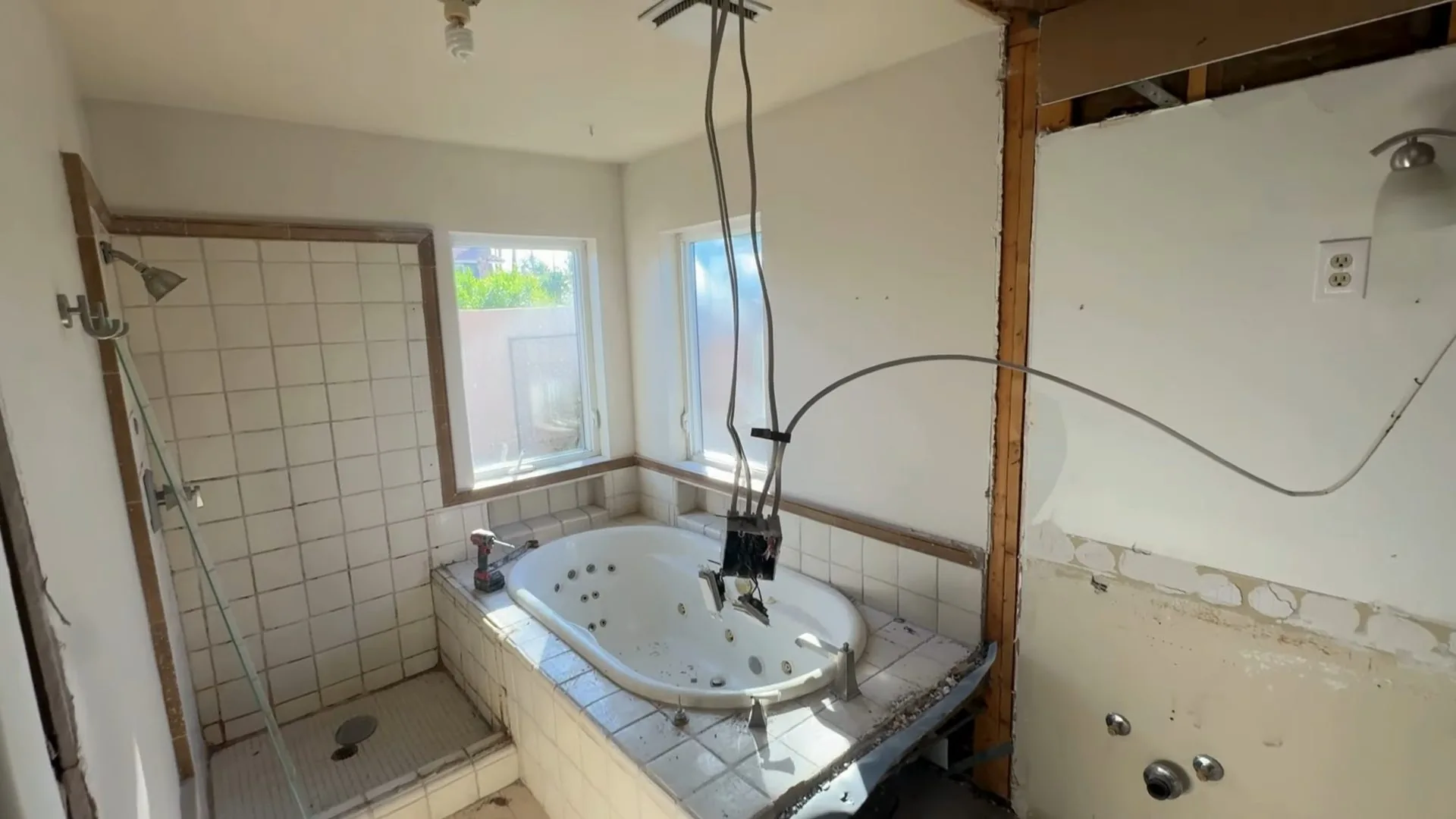
Replacing a tub or converting a tub to a walk-in shower is the most common bathroom project we are involved in, and the plumbing part is usually more straightforward than the finishing part.
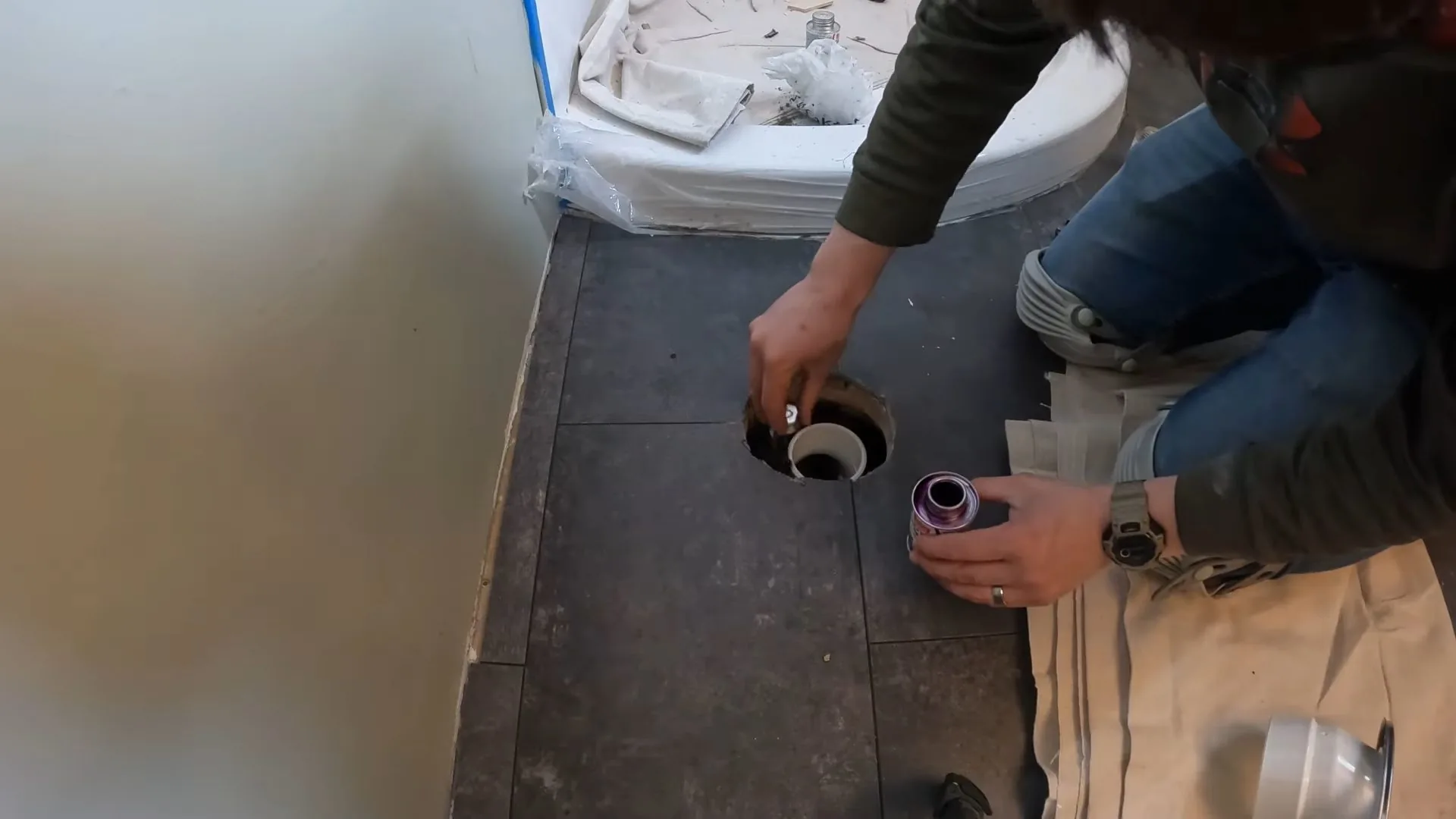
What drives the work is whether the drain location moves. A like-for-like tub replacement often reuses the existing rough-in. A conversion to a larger shower almost always means relocating the drain, which means opening the floor.
Older homes add a variable: the waste and vent arrangement behind an original tub is sometimes not what current code expects, and that gets corrected as part of the work rather than built around.
Toilets, flanges and soft floors
A toilet that rocks slightly is not a cosmetic problem. Movement breaks the seal below it, and once the seal is broken every flush puts a small amount of water into the subfloor.
By the time the floor feels soft around the base, the subfloor under it has usually been wet for a long time and the closet flange it bolts to may have corroded or cracked. Resetting a toilet onto a damaged flange is the repair that does not hold, so the flange gets dealt with properly.
Rough-ins for a bathroom that is being changed
Where fixtures move rather than being swapped in place, the work becomes a rough-in and the sequence changes. Supply and waste are run and left exposed, inspected, and only then closed up.
In Florence County that means underground plumbing inspected after the trench is open and the pipe is in, before backfill, then rough-in, then final, with tests following Section P312 of the Standard Plumbing Code. Permits go through the county building inspection department on (843) 676-8600.
The practical consequence is scheduling. A bathroom that is being reconfigured cannot be closed up on the contractor's timetable alone, and anyone quoting it as if it can is not planning for the inspection.
Where our bathroom scope stops
Our bathroom work is wet-space plumbing: showers, tubs, the valves and drains behind them, toilets, and the supply and waste that serve them.
We do not take on general bathroom remodeling, tiling, cabinetry or finishing work, and we would rather say that at the start than get halfway into a project and hand it back. If your project is a full remodel, the plumbing portion is the part we quote.
Bathroom questions before you start work
There is a stain on my ceiling under the bathroom. What is leaking?
There are four usual causes and they are told apart by timing. A stain that only appears after someone showers points at the shower pan or its drain connection. One that appears whether or not the shower was used points at a supply line or valve, because those are under pressure constantly. One that appears after a flush points at the toilet seal. We test for which before opening the ceiling, since the ceiling repair is often the bigger cost.
Do you have to remove tile to fix a shower valve?
Usually not. Most shower valve work is done from the front through the trim plate, so the cartridge comes out without touching tile. Where the valve body itself has failed, an access panel from the other side of the wall is the normal route. Tile removal is a last resort and we would tell you before starting if it looked likely.
My toilet rocks slightly. Does that actually matter?
Yes. Movement breaks the seal underneath, and after that every flush puts a little water into the subfloor. By the time the floor feels soft around the base, the subfloor has usually been wet for a while and the closet flange may be cracked or corroded. Resetting the toilet without repairing the flange is the fix that does not hold.
What does bathroom plumbing work cost in Florence?
It depends mainly on whether fixtures stay where they are. A like-for-like tub or fixture replacement reusing the existing rough-in sits well below a conversion that moves a drain, because moving a drain means opening the floor. Permitted rough-in work also carries inspection scheduling. We give a range before starting, and the Cost page carries wide market ranges.
Do you do full bathroom remodels?
No. We do the wet-space plumbing: showers, tubs, the valves and drains behind them, toilets, and the supply and waste serving them. We do not take on tiling, cabinetry or finishing work. If you are doing a full remodel, we quote the plumbing portion and work alongside whoever is handling the rest. Licensing for the plumbing scope can be checked at verify.llronline.com under the Residential Builders Commission.
Planning bathroom work in Florence?
Describe what is happening and you get a straight read on the likely cause, what the fix involves, and a price range before any work starts.