
Gas Services · Florence, SC
Home Gas Line Repair in Florence, SC: Suspected Leaks, Appliance Hookups and Inspections
If you can smell gas right now, stop reading. Leave the building, take everyone with you, and call from outside. Do not switch anything on or off on the way out, including lights, and do not use a phone indoors.
Once everyone is out and the utility has been notified, a plumber can locate and repair the line. That order matters, and it is the one part of this work where the sequence is not negotiable.
If you smell gas
- Leave the building immediately and take everyone with you, pets included.
- Do not operate any electrical switch, appliance or phone inside the building, and do not relight a pilot.
- If you can reach the outside shutoff safely on your way out, close it. If not, leave it.
- Call from outside, at a distance from the building. Notify the gas utility first, then us.
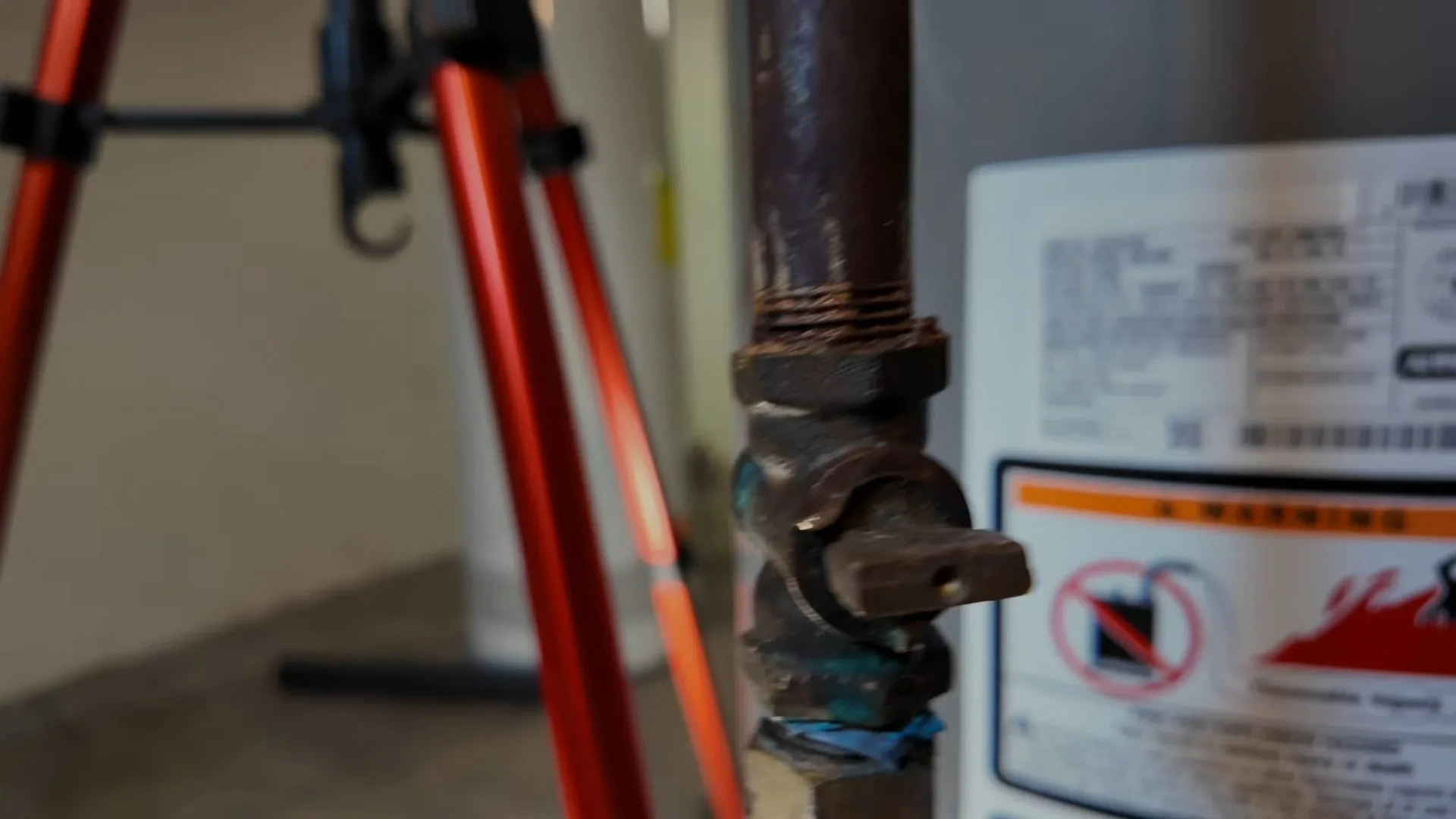
Finding the leak: detection and pressure testing
A gas leak is confirmed by a pressure test rather than by smell alone. The line is isolated, brought up to test pressure and watched on a gauge. A line that holds pressure is sound. A line that drops has a leak, and the rate of the drop tells you roughly how large.
Locating it is the next step. Electronic detectors pick up concentrations at joints and fittings, and a solution test confirms the exact point. The combination matters, because a detector finds the area and the solution test finds the fitting.
Buried line is harder and worth saying plainly: it may mean exposing sections. We do not guess at a location and open ground hoping to be right.
Signs worth a test even without a smell
- A hissing sound near an appliance, a meter or a run of pipe
- A gas bill that has moved with no change in how much you use
- Dead or discolored vegetation in a line over a buried gas run
- Pilot lights that keep going out, or burners running yellow rather than blue
- Any gas appliance that has been moved, replaced or reconnected without a test
Suspect a leak but cannot smell one? A pressure test answers it definitively rather than leaving you guessing.
Call (866) 919-0785Repairs, extensions and appliance hookups
Once a leak is located, the repair is usually a section of pipe or a fitting rather than the whole run. Where corrosion has taken a section, replacing a longer length costs less overall than returning for the next failure a few feet along.
New runs come up most often for a range, a dryer, a water heater, a fireplace or an outdoor grill or generator. The work is the same in principle: size the line for the load, run it, test it, then connect.
Sizing is the part people underestimate. Adding an appliance to a line already at capacity starves everything on it, and the symptom shows up at the appliance furthest along rather than the new one.
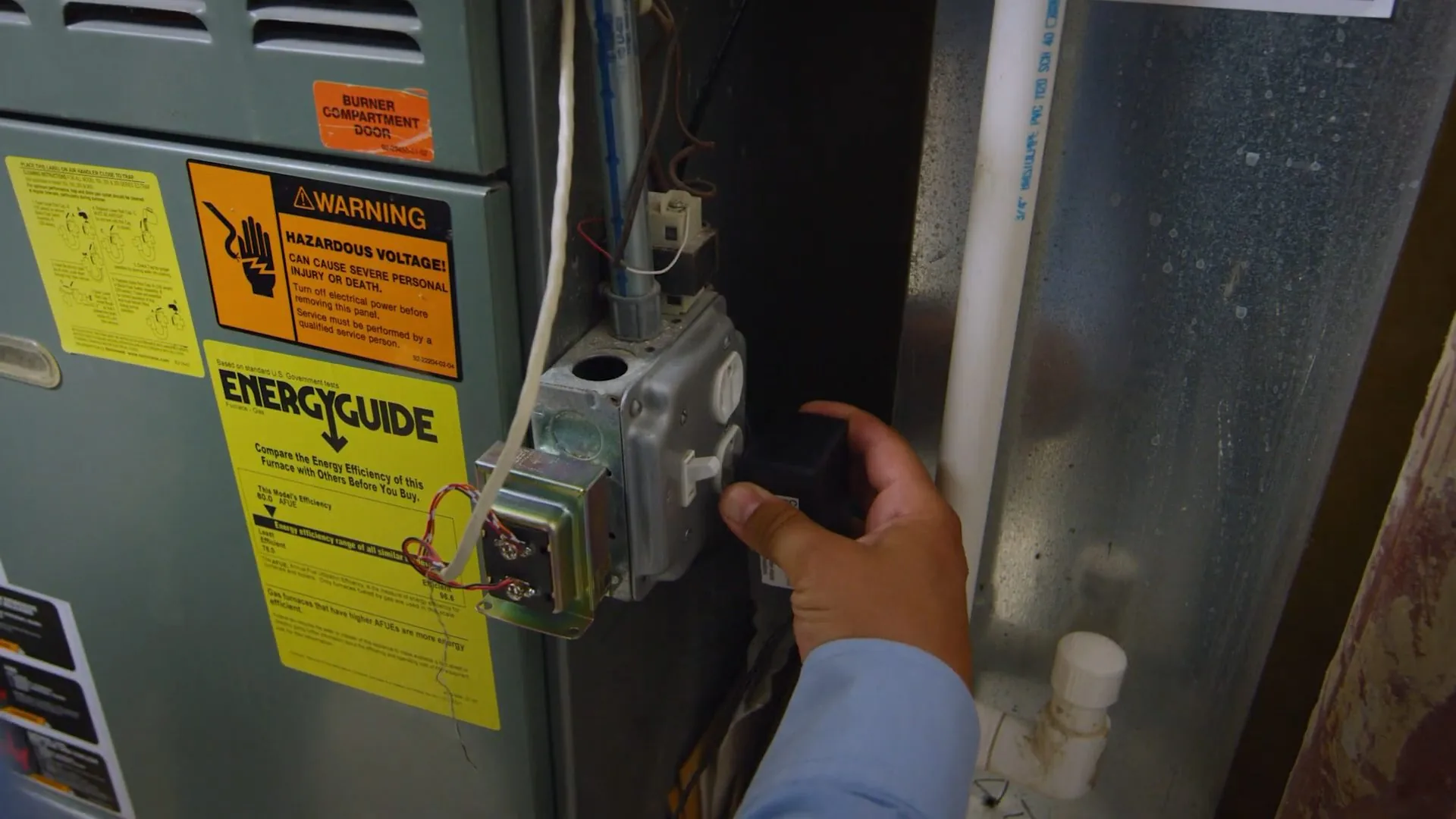
The inspection sequence in Florence County
Gas work here is permitted and inspected, and the sequence is fixed. The Florence County Building Inspection Department handles it on (843) 676-8600.
Gas gets a rough piping inspection, then a final piping inspection which includes a pressure test, and that final test has to pass before any fixture or gas appliance is connected. Inspection requests are usually handled within two days.
- Permit applied for, with proof of an SC license where one is required.
- Pipe run and left exposed. Rough piping inspection.
- Final piping inspection, including the pressure test, before anything is connected.
- Appliances connected and commissioned once the test has passed.
That sequence is why a gas job cannot be compressed into an afternoon the way a fixture swap can. When someone quotes gas line work without mentioning inspections, it is worth asking why.
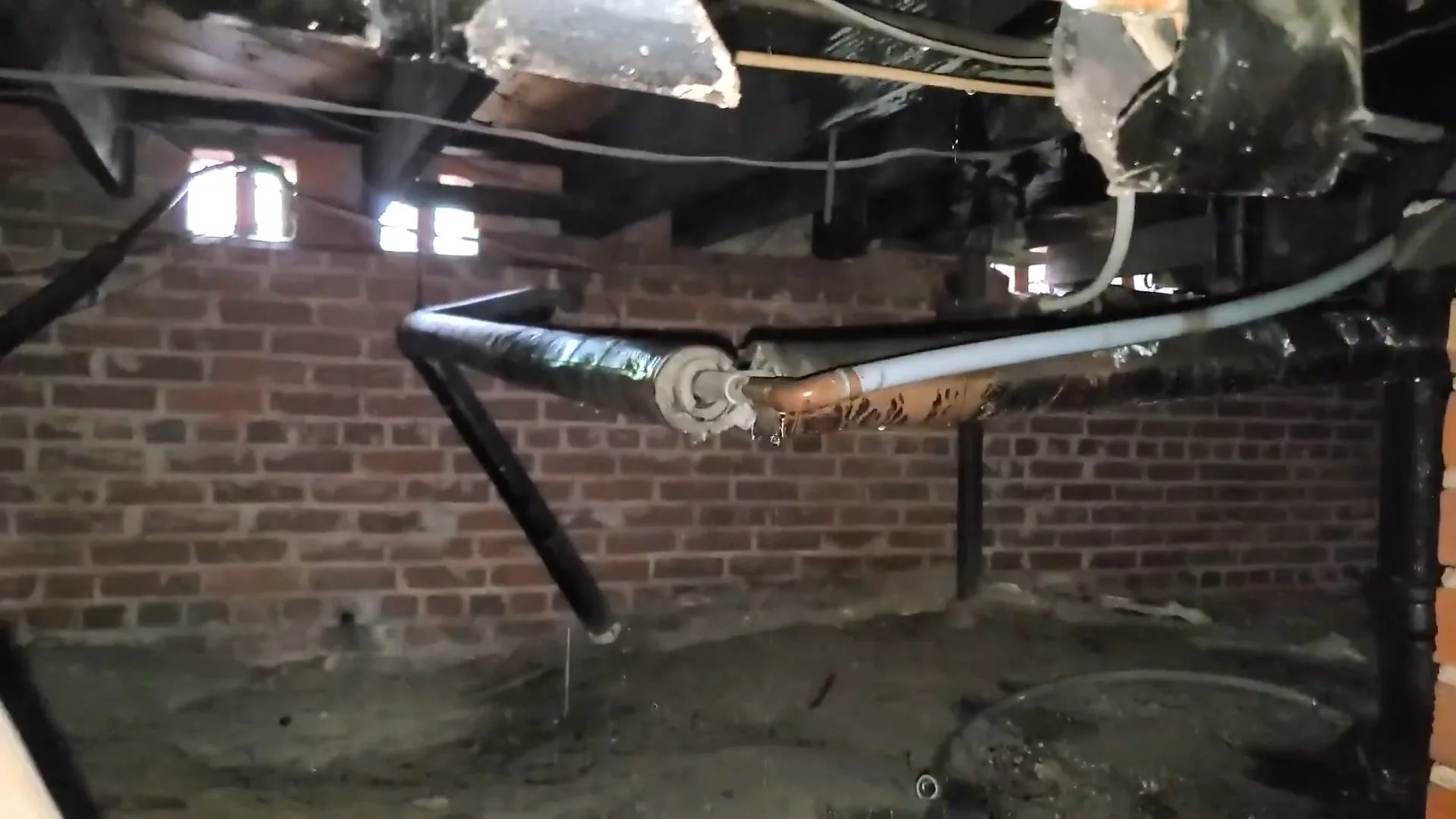
What makes gas work different here
Two local factors shape this work. The first is the ground. Buried gas line in this area sits in soil that holds moisture after the heavy rainfall the county records, and sustained moisture against buried steel is what drives external corrosion over decades.
The second is utility locating. Any digging needs locating done first, and the footer on every page of this site says so for a reason. That applies to a plumber running a new gas line and equally to a homeowner putting in a fence post.
Gas safety and permitting questions
What should I do first if I smell gas in my house?
Leave immediately with everyone in the building and do not operate any electrical switch, appliance or phone on the way out, because a spark is the risk. Do not relight a pilot. Call from outside at a distance, notify the gas utility first, then call a plumber. Only go back in once the utility says it is safe.
What inspections does gas line work need in Florence County?
Gas work gets a rough piping inspection and then a final piping inspection that includes a pressure test, and that test has to pass before any fixture or gas appliance is connected. Permits go through the Florence County Building Inspection Department on (843) 676-8600, and inspection requests are usually handled within about two days.
Can I add a gas line for a grill or a generator myself?
Running gas pipe is permitted and inspected work, and South Carolina requires a Residential Plumber license from the Residential Builders Commission for residential work over $500. Beyond the legal position, sizing is the practical problem: adding a load to a line already at capacity starves the appliances furthest along, and the fault shows up somewhere other than the thing you just added.
What does gas line repair cost in Florence?
It depends on the length of the run, how much of it is accessible, whether the work is a repair to an existing line or a new extension, and the pressure testing required. A short accessible repair sits at the low end and a long buried run at the high end. We give a range before any work starts, and the Cost page lists wide market ranges for gas line repair and new extensions.
How do I verify a plumber is licensed for gas work in South Carolina?
The state publishes a public licensee lookup at verify.llronline.com under the Residential Builders Commission, and the Commission can be reached on (803) 896-4696. Residential work over $500 requires that license, and commercial work over $10,000 falls under the Contractor's Licensing Board. The county also requires proof of an SC license with the permit application where one is required for the work.
Suspect a gas leak on your property?
Describe what is happening and you get a straight read on the likely cause, what the fix involves, and a price range before any work starts.